
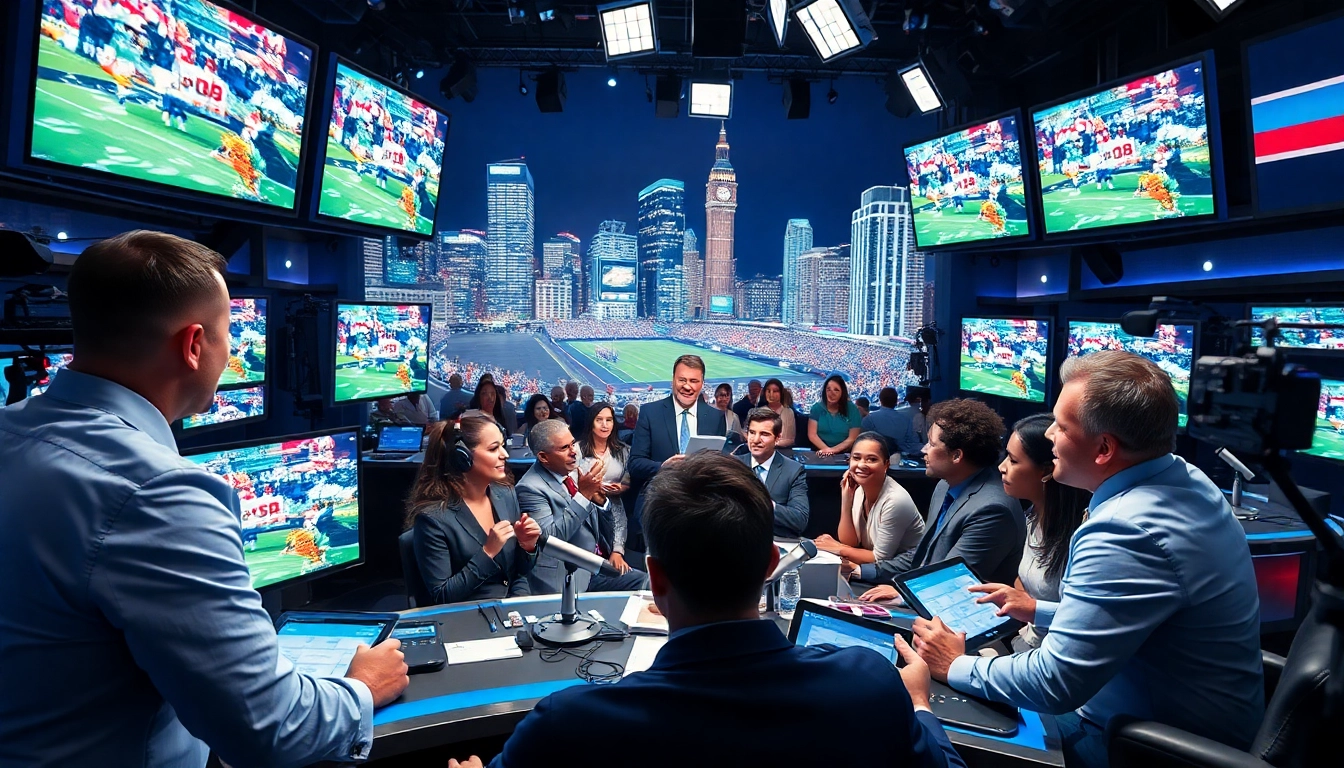
Understanding Sports Broadcasting
Definition and Importance
Sports Broadcasting refers to the live coverage and analysis of sporting events, ranging from minor league games to global championships. Its significance lies in its ability to connect fans with their favorite sports, offering them a platform to experience the thrill of the game in real-time. This dynamic field has evolved from traditional radio broadcasts to multi-faceted broadcasting platforms, including television, internet streams, and mobile apps, making Sports Broadcasting an essential part of sports culture.
Key Players in Sports Broadcasting
Numerous stakeholders contribute to the sports broadcasting ecosystem. Primarily, the entities involved include broadcasters, production companies, sports leagues, and advertisers. Broadcasters like television networks and streaming platforms hold the rights to air events, ensuring that they reach a wide audience. Production companies focus on bringing the event to life through camera work, commentary, and analysis. Leagues and sports organizations collaborate closely with these broadcasters to maximize viewership and revenue. Furthermore, advertisers play a crucial role, as their investments help finance broadcasts while targeting audiences effectively.
Evolution of Sports Broadcasting
The journey of sports broadcasting can be traced back to the early 20th century, when radio first became a popular medium. Descriptions of matches were transmitted to captivated audiences, who would gather around their radios to enjoy live updates. With the advent of television in the 1950s, sports coverage underwent a radical transformation, as visual storytelling gained prominence. The late 1990s and early 2000s saw the rise of cable television, offering dedicated sports channels and increasing live coverage. Today, digital platforms and social media have revolutionized how sports are consumed, heralding an era where viewers can enjoy live events at their convenience.
Technology in Sports Broadcasting
Latest Tools and Equipment
Today’s sports broadcasting relies on cutting-edge technology to enhance the viewer experience. High-definition cameras equipped with advanced optics capture every detail of the game, while drone technology offers aerial views that were previously unimaginable. Virtual reality (VR) and augmented reality (AR) tools are increasingly employed to provide immersive experiences, allowing audiences to feel closer to the action, whether through visual overlays of player statistics or interactive game experiences on digital platforms. These technologies allow broadcasters to present a rich, informative, and engaging live sports experience.
Impact of Streaming Services
Streaming services have emerged as major players in sports broadcasting, offering greater flexibility for viewers. Platforms like YouTube Live, Twitch, and dedicated sports streaming services provide on-demand access to games, catering to the preferences of modern consumers. This transition has forced traditional broadcasters to adapt, finding new ways to engage audiences by creating companion apps and interactive features. The ability to watch games anytime, anywhere has transformed sports consumption, fostering a new wave of fan engagement and loyalty.
Emerging Technologies
Emerging technologies such as artificial intelligence (AI) and machine learning are also reshaping sports broadcasting. AI enhances content production by automating highlights, generating commentary, and analyzing player performance in real-time. Additionally, machine learning algorithms facilitate audience engagement by personalizing content recommendations based on viewer preferences. Innovations like 5G technology promise to bolster streaming quality, reducing latency and enhancing the overall viewer experience. As broadcasters continue to innovate, the future looks bright for both viewers and content creators in the landscape of sports broadcasting.
Creating Engaging Content for Sports Broadcasting
Storytelling Techniques
Effective storytelling is vital in sports broadcasting, turning mundane updates into captivating narratives. By tapping into the personal stories of athletes, teams, and fans, broadcasters can create emotional connections that enhance viewer engagement. Techniques such as building suspense through dramatic highlights, using flashbacks for context, and featuring behind-the-scenes footage can enrich the storytelling experience. The rise of documentary-style broadcasts offers deep dives into sports narratives that resonate with audiences, encouraging loyalty and viewership.
Enhancing Viewer Experience
Engagement in sports broadcasting goes beyond just airing the event. Providing insightful commentary, engaging analysis, and incorporating interactive elements can boost viewer experience. Broadcasters must prioritize audience interaction through live polling, social media integration, and Q&A segments, allowing fans to voice their opinions and interact with hosts. Personalized viewing experiences—such as multi-camera angles or customizable graphics—enable viewers to curate their content, ultimately leading to increased satisfaction and retention.
Utilizing Social Media
Social media platforms play an indispensable role in today’s sports broadcasting landscape. Broadcasters leverage platforms like Twitter, Facebook, and Instagram to share instant updates, behind-the-scenes content, and real-time interactions during live events. This strategy not only increases engagement but also provides direct feedback from fans, enhancing viewer loyalty. Furthermore, user-generated content enriches the narrative, allowing fans to contribute their perspectives while enhancing community engagement. The integration of social media strategies is essential for modern sports broadcasters looking to reach and retain audiences.
Regulations and Ethics in Sports Broadcasting
Copyright and Licensing Issues
One of the foremost challenges in sports broadcasting lies in navigating copyright and licensing issues. Broadcasters must acquire the necessary rights to air sports events, which often involves negotiations with leagues, teams, and players’ associations. Failure to adhere to copyright laws can result in significant legal implications, including fines and loss of broadcasting privileges. Understanding the intricacies of licensing agreements is crucial for broadcasters to operate ethically and legally while ensuring that all parties involved are fairly compensated.
Ethical Reporting in Sports
Ethical reporting is fundamental in maintaining the integrity of sports broadcasting. Journalists and commentators must strive for accuracy, avoiding misinformation and sensationalism that can mislead viewers. The principles of fairness and balance are essential when covering teams, players, and events, as biased reporting can erode public trust. Furthermore, respecting the privacy of athletes and being mindful of mental health issues—particularly during times of crisis—should guide reporting practices within the industry.
Compliance with Broadcasting Standards
Broadcasting standards are imposed by regulatory bodies, ensuring that all content meets ethical and legal guidelines. Compliance includes adhering to rules about advertising, content appropriateness, and fair competition. Broadcasters must maintain transparency with audiences regarding sponsorships and partnerships while fostering a safe environment for viewers of all ages. Navigating these standards is complex but crucial, as non-compliance can have far-reaching consequences for broadcasting institutions.
Future of Sports Broadcasting
Trends Shaping the Industry
As technology evolves, various trends are shaping the future of sports broadcasting. Enhanced interactivity, personalization, and viewing flexibility are leading the charge. The incorporation of immersive technologies like VR and AR is expected to transform how fans experience live sports, making them feel as if they are part of the action. Additionally, data analytics will empower broadcasters to refine their offerings, tailoring content to meet audience preferences while optimizing advertising strategies to yield better returns.
Adapting to Consumer Preferences
Understanding and adapting to consumer preferences is essential for the ongoing success of sports broadcasting. With the rise of on-demand culture, audiences expect flexibility in how they consume content. Broadcasters must offer multiple platforms and formats—live, replays, highlights, and exclusive digital content—to cater to varying audience preferences. Continuous feedback collection, either through surveys or social media, enables broadcasters to adapt swiftly and remain relevant in an ever-evolving landscape.
Challenges Ahead for Sports Broadcasting
The sports broadcasting sector faces numerous challenges as it navigates its future. Competition from non-traditional platforms and services has intensified, posing a significant threat to traditional broadcasters’ viewership and revenue. Additionally, technological advancements require continual investment, posing budgetary challenges for smaller networks. Furthermore, as viewer habits evolve, maintaining engagement and relevance dictates a commitment to innovation and excellence in programming.
FAQs
What Are the Main Roles in Sports Broadcasting?
Main roles include commentators, producers, and technical staff who ensure smooth broadcasts.
How Has Technology Changed Sports Broadcasting?
Technology has enabled real-time feeds, interactive content, and enhanced viewer engagement.
What Are Common Challenges in Sports Broadcasting?
Challenges include maintaining broadcasting rights, meeting viewer expectations, and adhering to regulations.
How Do Streaming Services Affect Sports Broadcasting?
Streaming services provide on-demand access, increasing competition but also expanding viewer reach.
What Is the Future of Sports Broadcasting?
The future includes growing use of augmented reality and improvements in viewer personalization.